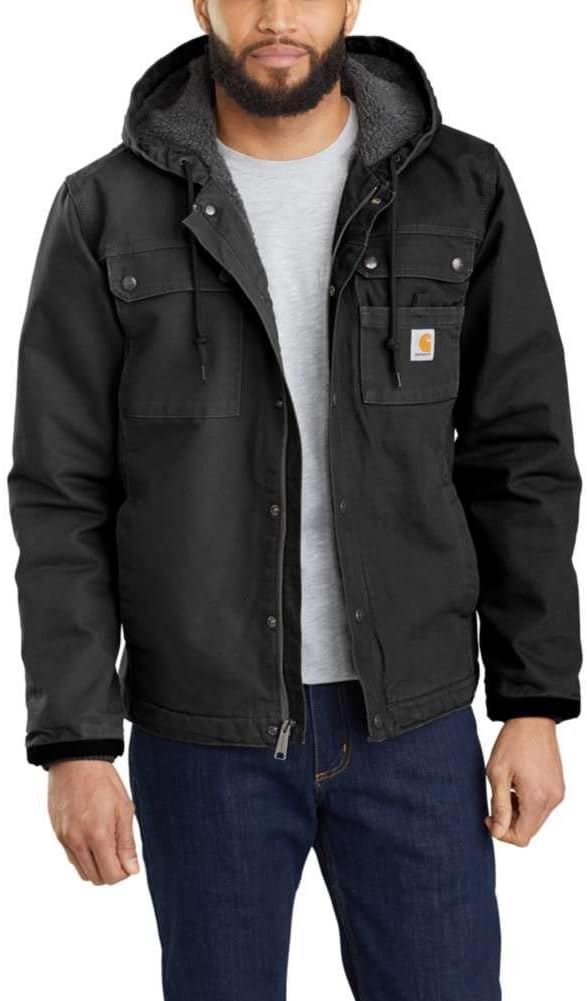
You just grabbed a Carhartt Duck Active Jacket off the rack at a farm-supply store because it was $90, it was there, and you needed a work layer before Monday. Six months later, it’s doing its job. But a coworker walks in wearing something that looks suspiciously similar — heavier, darker, with a faint waxy sheen — and mentions she paid $185 for it three years ago and it still sheds rain. That moment is the beginning of a real decision. Do you keep replacing affordable duck canvas (a tightly woven cotton fabric, stiff when new, that toughens with wear), or do you invest once in something waxed, blanket-lined, or built to last a decade? This article compares the Carhartt duck lineup to its most credible alternatives — Filson, Pointer Brand, Tin Cloth options, and a few others — using published specs, owner-reported longevity, and straightforward cost-per-wear math. By the end, you’ll have a clear framework for which jacket earns its price at your workload.
| EDITOR'S PICKCarhartt Men's Washed Duck Bart… | Mid-tierDRI DUCK Cheyenne Men's Cotton… | Budget pickBerne Men's Heritage Duck Hoode… | |
|---|---|---|---|
| Material | Washed Duck | Cotton Canvas | Duck |
| Hood | ✗ | ✓ | ✓ |
| Color options | Black | Khaki | Brown Duck |
| Price | $149.99 | $92.93 | $78.91 |
| See on Amazon → | See on Amazon → | See on Amazon → |
What “Duck Canvas” Actually Means (and Where Carhartt Sits in the Market)
Duck canvas is a plain-weave cotton fabric rated by weight in ounces per square yard. Carhartt’s standard Duck Active Jacket (style C003) uses 12-ounce duck canvas — a spec confirmed on Carhartt’s published product materials and consistent across decades of production. Twelve-ounce duck is stiff new, breaks in over weeks of wear, and offers solid abrasion resistance for light-to-moderate site work: framing, landscaping, general trades. It is not a rain jacket. It is not rated for sustained wet weather. It is a wind-resistant, abrasion-resistant shell that performs well in dry cold.
Heddels, in their guide “A Guide to Duck Canvas: What It Is and Why It Matters,” notes that weight alone doesn’t tell the whole story — weave tightness and finish matter, and waxed or oiled treatments fundamentally change how cotton duck behaves in precipitation. An unwaxed 12-ounce jacket and a waxed 8-ounce jacket can feel totally different in a drizzle, even though the raw canvas weight favors the unwaxed piece. That distinction is worth internalizing before you price-shop.
Carhartt sits in the mid-tier by construction, not just price. The jacket uses a blanket-style quilted lining on lined variants and relies on bar-tacking at stress points. Owner reviews aggregated at Workingpersonstore.com consistently report 2–4 years of hard daily use before seam failure or significant wear-through, which maps to roughly $22–$45 per year of ownership at the current MSRP of approximately $90 for the unlined version and approximately $115 for the blanket-lined C026.
The Competitor Field: Four Jackets Worth Comparing
Filson Tin Cloth Short Cruiser (~$375)
Carhartt
$149.99
In stock on Amazon
Check price on AmazonFilson’s Tin Cloth line uses a proprietary oil-finish cotton that the company rates for water resistance without a membrane. Field Mag, in their piece “Why Waxed Canvas Still Makes Sense in 2025,” notes that Tin Cloth — Filson’s branded treatment — sits between traditional wax (which blooms and transfers) and a dry finish, making it easier to maintain in work conditions. The Short Cruiser is cut for layering, offers game pockets, and weighs considerably more than Carhartt’s duck shell. Owners consistently describe it as a jacket you feel on your body in ways that a lighter shell simply isn’t.
Tradeoffs: At $375 MSRP, you’re paying roughly four times the Carhartt baseline. The cost-per-wear math only works if the jacket lasts ten or more years — which documented owner reports suggest is plausible with re-waxing every two to three seasons. Filson offers a repair program, which extends the math favorably. If you’re working in conditions that involve grinding against rough surfaces daily — roofing, concrete work — the abrasion profile of waxed cotton differs from raw duck; owners report faster surface wear on wax finishes under high-friction conditions.
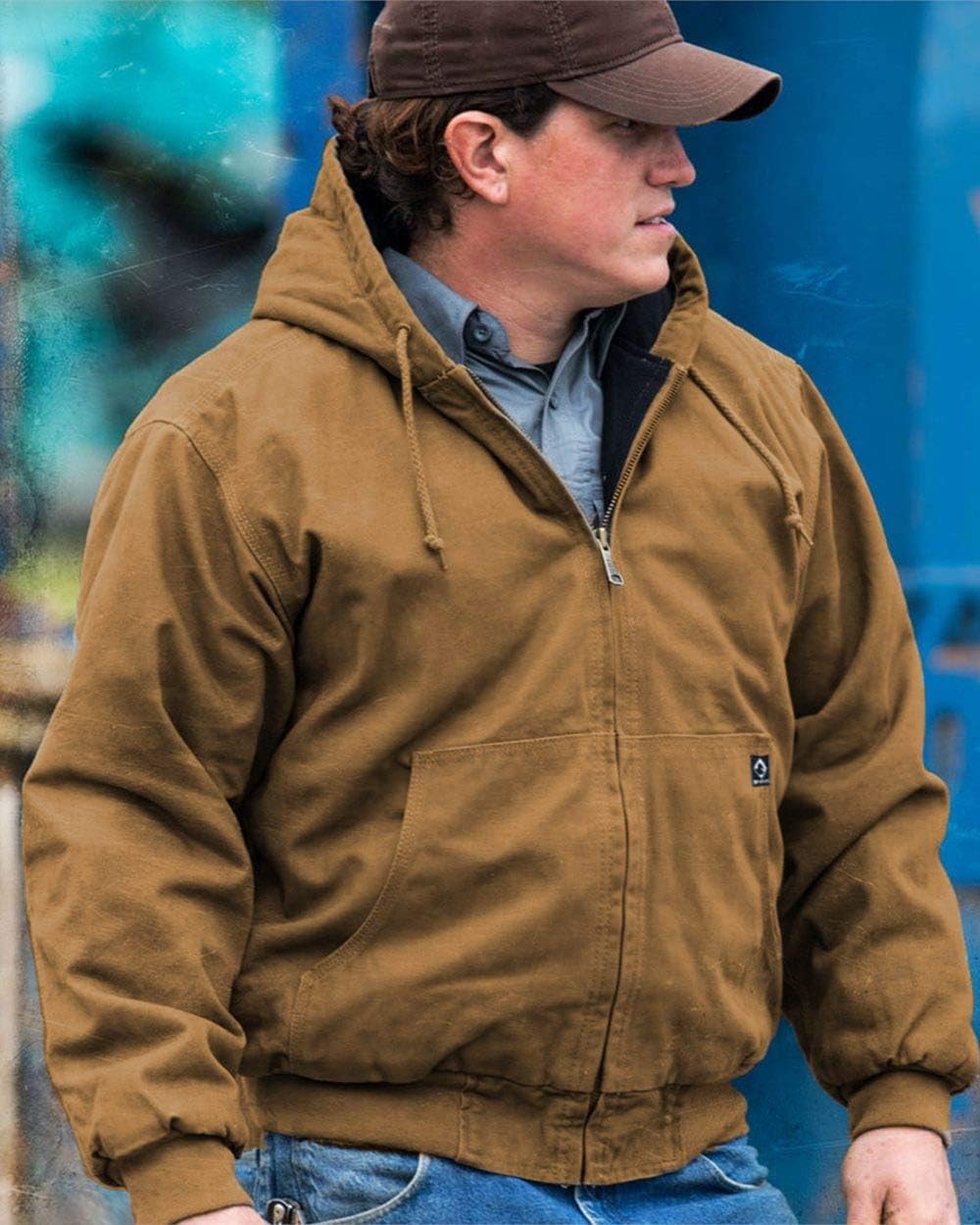
Pointer Brand Duck Chore Coat (~$110–$130, made in USA, Lebanon, TN)
DRI
$92.93
In stock on Amazon
Check price on AmazonPointer Brand is the under-discussed American-made option in this category. Their Duck Chore Coat uses 10–12 ounce US-milled duck and is cut in Tennessee, per the brand’s published product materials. Popular Mechanics, in their feature “Best Work Jackets for Every Job,” flagged Pointer as a brand that punches above its price in construction quality, specifically noting the blanket lining weight and the reinforced front pockets. At $110–$130, the Pointer Chore Coat sits just above Carhartt’s blanket-lined model and offers a meaningful provenance advantage for buyers who weight country of origin.
Tradeoffs: Pointer’s retail distribution is narrower — you’re ordering online or finding a regional workwear store. Sizing runs traditional and boxy, and owner feedback aggregated across workwear communities notes that sizing is consistent but runs slightly large. It is a fit-for-work silhouette rather than a fit-for-layering cut.
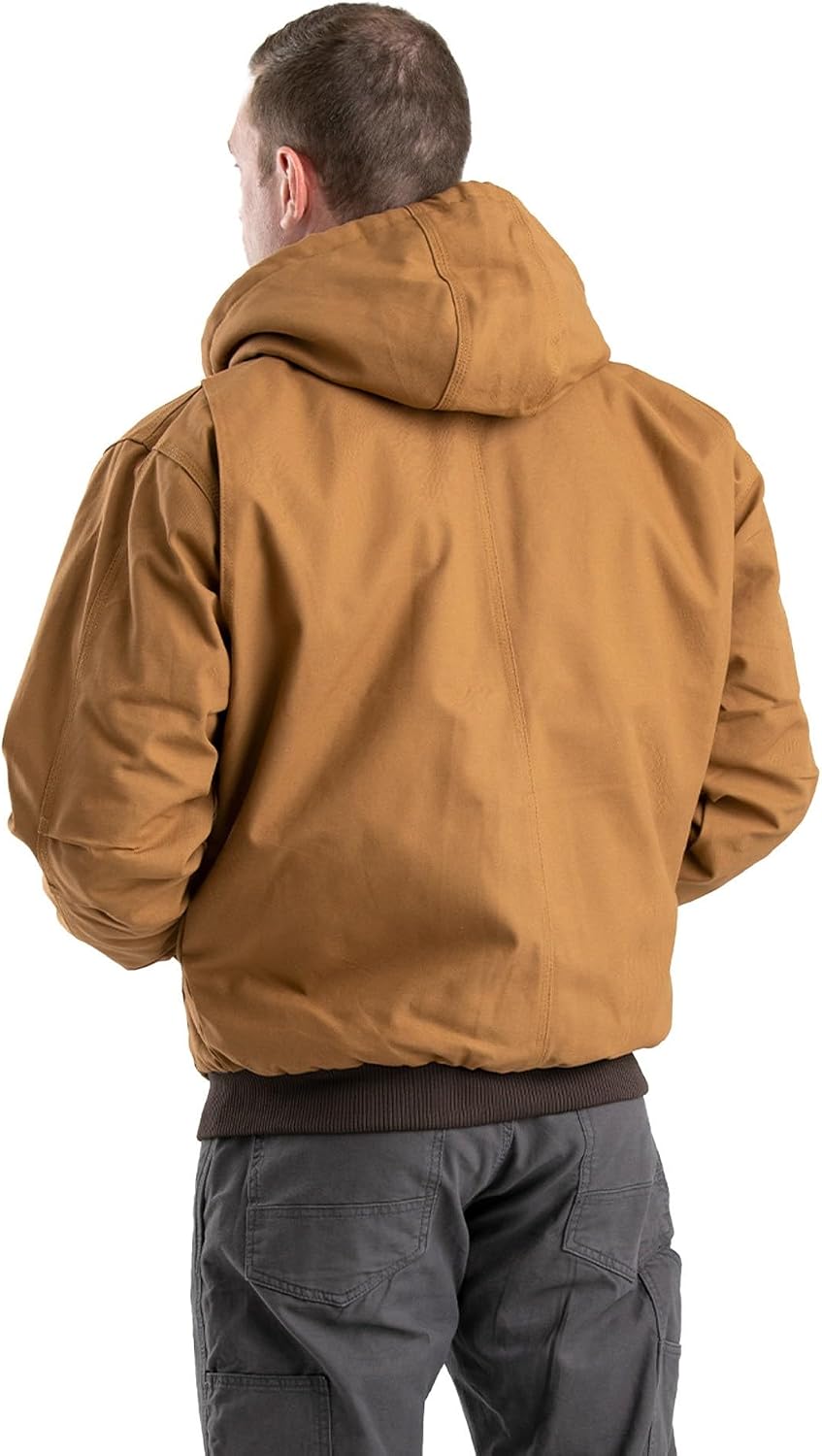
DIY-Waxed Carhartt (~$130–$145 total)
Berne
$78.91
In stock on Amazon
Check price on AmazonSeveral buyers in the intermediate-practitioner tier have taken to purchasing Carhartt or Pointer duck jackets and waxing them independently using bar wax products such as Otter Wax. Field Mag’s “Why Waxed Canvas Still Makes Sense in 2025” walks through the process: heat the canvas lightly, apply wax in sections, work it in, heat again to set. The result is a jacket that sheds light rain and develops a patina with wear. Cost to DIY-wax a $115 Carhartt runs roughly $130–$145 total — yielding rain resistance that would otherwise require a $300-plus purchase.
Tradeoffs: DIY waxing is practically irreversible in the sense that re-waxing becomes a seasonal maintenance task. Wax finishes transfer onto anything the jacket contacts — car seats, upholstery, adjacent clothing. For site workers and outdoor tradespeople this is a non-issue; for anyone who wears the jacket into client-facing environments, it warrants consideration before committing.
Carhartt Blanket-Lined Duck Active Jacket (~$115, C026)
Worth naming explicitly as its own tier within the Carhartt lineup. The blanket lining — a quilted poly-fill layer under a cotton flannel face — adds meaningful warmth for sub-40°F work conditions and costs roughly $25 over the unlined shell. Owner reviews at Workingpersonstore.com rate it consistently for warmth-to-weight in dry cold. It is still not a rain garment, and that ceiling is real.
The Cost-Per-Wear Math
| Jacket | Price (MSRP) | Est. Working Life | Cost / Year |
|---|---|---|---|
| Carhartt Duck Active (unlined) | ~$90 | 2–3 years hard use <a class="product-link" href="https://www.amazon.com/dp/B000FH5M9C?tag=greenflower20-20" rel="sponsored nofollow noopener" target="_blank" title="Affiliate link — we may earn a commission.">Berne — $78.91</a> | $30–$45 |
| Carhartt Blanket-Lined Duck (C026) | ~$115 | 2–4 years hard use <a class="product-link" href="https://www.amazon.com/dp/B000FH5M9C?tag=greenflower20-20" rel="sponsored nofollow noopener" target="_blank" title="Affiliate link — we may earn a commission.">Berne — $78.91</a> | $29–$58 |
| Pointer Brand Duck Chore Coat | ~$120 | 4–6 years (owner reports) <a class="product-link" href="https://www.amazon.com/dp/B003UD8JYS?tag=greenflower20-20" rel="sponsored nofollow noopener" target="_blank" title="Affiliate link — we may earn a commission.">DRI — $92.93</a> | $20–$30 |
| DIY-Waxed Carhartt | ~$140 | 3–5 years with maintenance <a class="product-link" href="https://www.amazon.com/dp/B003UD8JYS?tag=greenflower20-20" rel="sponsored nofollow noopener" target="_blank" title="Affiliate link — we may earn a commission.">DRI — $92.93</a> | $28–$47 |
| Filson Tin Cloth Short Cruiser | ~$375 | 10–15 years with re-waxing <a class="product-link" href="https://www.amazon.com/dp/B07S3GYBSG?tag=greenflower20-20" rel="sponsored nofollow noopener" target="_blank" title="Affiliate link — we may earn a commission.">Carhartt — $149.99</a> | $25–$38 |
Estimated working life is drawn from aggregated owner reviews, not internal lab testing. “Hard use” means daily wear in trades or outdoor labor.
The numbers compress at the top. A Filson at $375 spread over twelve years costs roughly $31 per year — nearly identical to a Carhartt replaced every three years. The difference is what you hold in your hands: a jacket that improves with age and carries a repair ecosystem versus one that gets donated when the lining fails.
Construction Details That Actually Move the Needle
Seam construction: Carhartt duck jackets use triple-stitched main seams on current production — a spec confirmed in their published product materials. Pointer Brand uses a similar construction. Filson’s Tin Cloth uses flat-felled seams on critical stress points, which are inherently stronger because the seam allowance is folded and stitched twice. For buyers who are hard on seams — scaffolding, climbing, repetitive overhead work — flat-felled construction is the meaningful upgrade.
Closures: Carhartt uses a brass zipper on the C003 and C026 with a snap placket over it. Owner reviews at Workingpersonstore.com identify the zipper as the first failure point on older jackets, typically at three to four years of daily use. Filson uses heavier YKK zippers on current production. Pointer Brand uses snaps on the chore coat variant — no zipper to fail, though snap replacement is its own maintenance task over time.
Lining options: “Blanket lining” is a term used loosely across brands. In Carhartt’s case it refers to a quilted poly-fill layer with a flannel face — warm but not breathable under hard exertion. Filson offers either an unlined cut for layering or a wool-blend lining on some variants, which regulates temperature more actively. Field Mag’s coverage of waxed canvas construction notes that wool-lined waxed canvas manages moisture from the inside differently than synthetic lining — a real distinction for anyone working hard enough to sweat through a shift.
Decision Rules: If X, Then Y
You’ve done the comparison. Here’s how to resolve it.
If you’re replacing a jacket that died in under two years of hard daily use: The Carhartt is doing its job at a specific durability ceiling, but you’re in a replacement cycle that costs more than it appears. Price out the Pointer Brand or a DIY-waxed Carhartt. Either option runs $120–$145 upfront and is credibly reported by owners to last twice as long under equivalent conditions.
If rain is a real job condition and not just an occasional drizzle: Unwaxed duck canvas is the wrong tool. Either wax what you have, buy waxed at the outset, or add a separate waterproof shell layer over your duck jacket. Filson Tin Cloth is the premium answer. DIY waxing your current jacket is the budget answer. Buying another unwaxed Carhartt and hoping for the best is not an answer.
If country of origin or supply-chain transparency matters to your purchase: Pointer Brand is the overlooked option in this conversation. Made in Tennessee, priced within $20–$30 of Carhartt’s blanket-lined model, and identified by Popular Mechanics as a construction quality overperformer in their work jacket roundup. If you already source your denim by mill and read Heddels for workwear context, Pointer deserves a serious look.
If you’re outfitting a crew of four to six workers and cost is the primary lever: Carhartt remains the correct default. The distribution network, standardized sizing across SKUs, and low replacement cost make it the lowest-friction option at volume. The cost-per-wear advantage of premium alternatives assumes individual ownership and active maintenance — it doesn’t scale cleanly across crew purchasing.
If you want one jacket that lasts a decade without revisiting the decision: The Filson Tin Cloth math is real, particularly if you use their repair program. Spend the $375 once, re-wax every two to three seasons with roughly $15 worth of wax, and stop having this conversation.
The duck canvas work jacket is one of the most legible garment categories in workwear: simple construction, transparent materials, and decades of owner data to draw from. The Carhartt is not a bad jacket — it is a correct jacket at a specific price and durability tier. The question is whether you have outgrown that tier, and now you have enough information to answer it honestly.