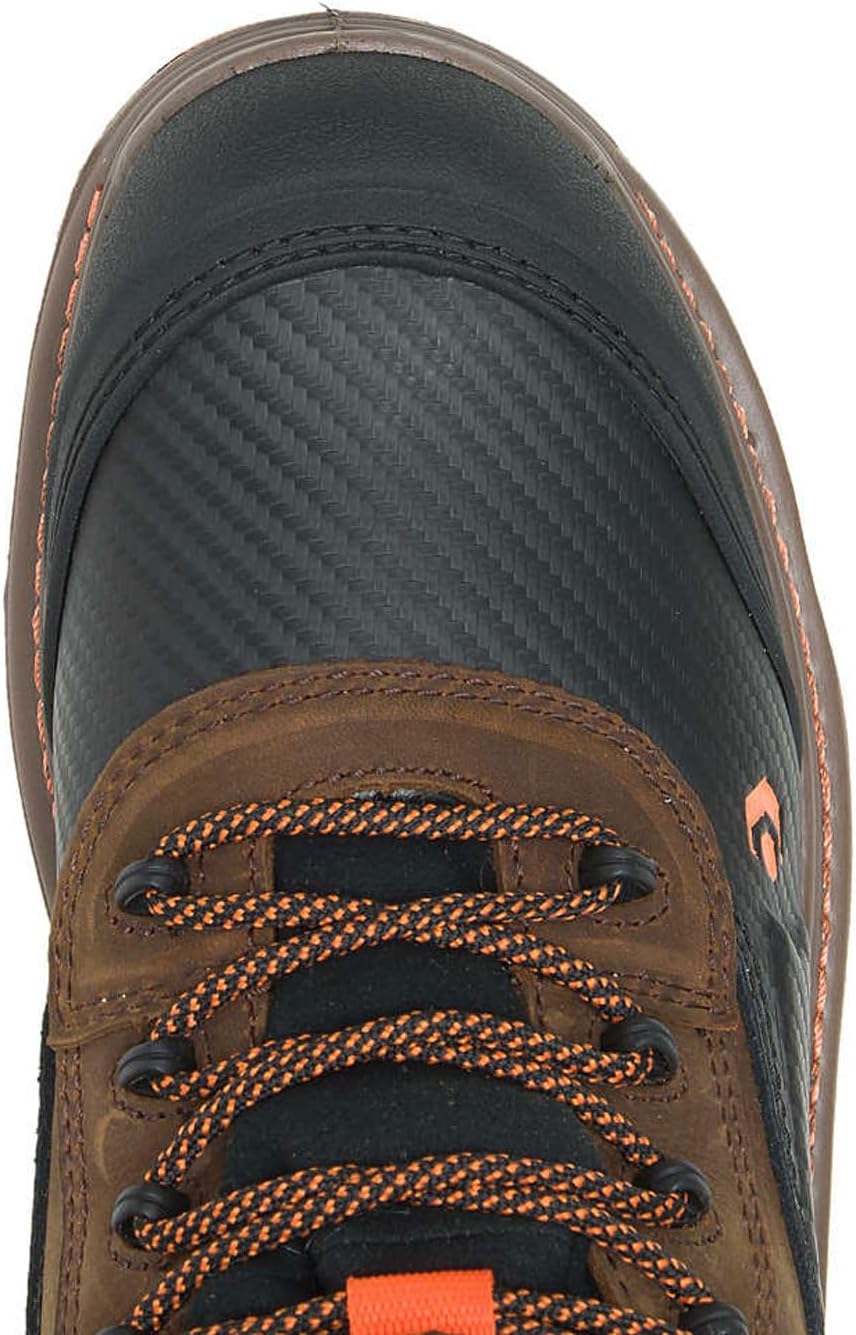
You just dropped $180 on a pair of Wolverine 1000 Mile boots, and now you’re staring at them wondering if you bought the brand’s flagship heritage piece or a nostalgia prop stitched together offshore. It’s a fair question — and you’re not paranoid for asking it. Wolverine has been making boots in Rockford, Michigan since 1883, but like most legacy American brands, the modern lineup is a mix of genuine craftsmanship and volume-production filler. A Goodyear welt (a construction method where the upper leather and insole are stitched to a strip of leather called the welt before the outsole is attached — allowing the boot to be resoled multiple times) sits alongside cemented soles (glued, not stitched, and not repairable) in the same product catalog under the same brand name. Understanding which is which — and knowing that Wolverine’s sizing has shifted noticeably over the past decade — is the difference between a decade-long investment and an expensive mistake.
This article maps the welt construction across Wolverine’s current tiers, names the sizing drift patterns that forum communities and owner reviews consistently flag, and gives you a clear decision framework for whether a Wolverine boot belongs on your feet or your shortlist right now.
| EDITOR'S PICKWolverine Men's Overpass Compos… | Mid-tierWolverine Men's Loader 6" Soft… | Budget pick[Wolverine [Floorhand](https://www.amazon.com/dp/B0BL85KDW2?tag=greenflower20-20) Waterproof](https://www.amazon.com/dp/B019T9E8KU?tag=greenflower20-20)… | |
|---|---|---|---|
| Toe Type | Composite | Soft | Steel |
| Waterproof | ✓ | — | ✓ |
| Height | — | 6" | 6" |
| Sole Type | — | Wedge | — |
| Price | $179.95 | $139.95 | $103.58 |
| See on Amazon → | See on Amazon → | See on Amazon → |
Welt Construction: The One Spec That Determines Repairability
The reason construction method matters more than almost any other spec on a work boot is resole economics. A Goodyear-welted boot sent to a cobbler or a specialist like Theo’s Boot Repair or JLF & Associates can get new outsoles for $80–$120 — multiple times over a decade. A cemented boot that delaminates in year two is a trash-bin event. At $180–$650, that difference is decisive.
Wolverine’s welt landscape breaks into three tiers:
1. Goodyear Welt — Heritage and 1000 Mile lines The Wolverine 1000 Mile Boot and its variants (the Wingtip, the Chukka, the Original) are Goodyear welted and represent the brand’s legitimate heritage construction. Heddels’ brand history overview notes that the 1000 Mile line was revived in 2012 specifically to recapture the hand-sewn moccasin and Goodyear-welt construction the brand built its reputation on. These are resolable, built on full-grain leather, and made with domestic manufacturing involvement — though the degree of USA manufacturing content has varied by model year and Wolverine’s own disclosures have been inconsistent about which components come from where.
2. Goodyear Welt — Durashocks and select 8” work boots Some Wolverine work-tier boots (the Floorhand, the Raider) spec Goodyear welt construction and are marketed explicitly at tradespeople. Working Person’s Store’s product listings consistently note welt type, and the Floorhand in particular receives solid marks from reviewers for construction quality relative to price. These aren’t the same as the 1000 Mile in leather grade or finish, but the welt means they’re repairable.
3. Cemented / Direct-Attach — the volume of the lineup The majority of Wolverine’s current catalog — entry-level work boots, composite-toe offerings, the Overpass line, most of the lifestyle-adjacent “Lifestyle” segment — uses cemented or direct-attach construction. These boots are not resolable in any practical sense. Popular Mechanics’ work boot roundup notes that cemented construction is appropriate for buyers replacing boots every 18–24 months (standard in high-volume trade purchasing), but explicitly flags the lack of resole potential as a dealbreaker for long-horizon buyers.
The decision rule is simple: If you’re not buying a 1000 Mile series boot or a Goodyear-welted work boot with that spec explicitly stated in the product listing, assume the sole is cemented until proven otherwise.
Sizing Drift: What the Forums Are Consistently Reporting
This is the most practically useful and least-covered topic in Wolverine buying guides. Owner forum communities — documented across aggregated review threads on workwear-specific platforms and in Field Mag’s heritage boot buyer’s guide — have reported two distinct sizing patterns you need to account for before ordering.
Pattern 1: 1000 Mile runs long and narrow versus modern sizing Owners consistently report that the 1000 Mile lasts (the foot-shaped molds around which the boots are built) run approximately a half-size long and fit narrow through the toe box. This is common for heritage-last boots built to older American sizing conventions. The practical effect: buyers who normally wear a 10.5 D (medium width) in modern athletic or casual footwear frequently report that a 10 D or 10 EE (wide) fits more accurately. Gear Junkie’s work boot coverage has flagged this issue across multiple review cycles, noting it as a consistent source of returns and fit complaints.
Pattern 2: Sizing inconsistency between the 1000 Mile and the work-tier Goodyear-welt boots The Floorhand and Raider lasts are built differently than the 1000 Mile last. Owners who size down for the 1000 Mile and apply that correction to work-tier Wolverines report sizing problems in the other direction — the work-tier boots tend to run truer to standard sizing or even slightly small. There is no universal Wolverine size. You are sizing by model, not by brand.
By the Numbers — Sizing Correction Patterns from Aggregated Owner Reviews:
| Model | vs. Standard US Sizing | Width Notes |
|---|---|---|
| 1000 Mile Original | ~½ size long | Narrow; EE often needed for D-width feet |
| 1000 Mile Chukka | ~½ size long | Slightly roomier toe than Original |
| Floorhand (work tier) | True to size | Standard D width fits as expected |
| Overpass (cemented) | True to size | Wider toe box than heritage lasts |
If you’re ordering online — which is the primary channel for 1000 Mile buyers — size down a half for the heritage last and order from a retailer with no-friction returns. Working Person’s Store carries Wolverine’s work-tier lineup and has a documented return policy that accommodates size exchanges, which matters for the Floorhand and Raider where you need to try both the heritage-correct sizing logic and true-to-size before committing.
Which Models Are Actually Worth Buying in 2026
Wolverine’s brand trajectory is worth naming directly. After Wolverine World Wide (the parent company, which also owns Merrell, Sperry, and Keds) went through a significant financial restructuring and debt reduction cycle in 2023–2024, the brand has been rationalizing its premium manufacturing commitments. Heddels’ brand ownership and manufacturing timelines note that the Made-in-USA content of the 1000 Mile line has been a moving target — Wolverine has at times marketed these boots as American-made while using overseas components for some runs.
That’s the honest context. Here’s the model-by-model verdict:
Wolverine 1000 Mile Original Boot (~$375–$400) Still worth it, with caveats. This is Wolverine’s most defensible long-horizon purchase. Goodyear-welted, full-grain leather, resolable, and built on a last that fits the way heritage dress-work boots are supposed to fit. The construction is legitimately good at this price — you’re getting a resolable boot for considerably less than a Viberg or White’s entry point. The caveat: verify the current model year’s manufacturing disclosure before purchasing. Wolverine’s Made-in-USA claims have not always held up to scrutiny on specific production runs.
Wolverine 1000 Mile Wingtip (~$400) Worth it for buyers who want a formal-adjacent option. Same construction fundamentals as the Original. The brogue detailing holds up over multiple resoling cycles. Reviewers at Field Mag and Gear Junkie consistently place this in the “best heritage dress boot under $450” tier.
Wolverine Floorhand (~$160–$180) The best value in the lineup for working tradespeople. Goodyear-welted construction at a price point that competes directly with Thorogood’s job-site boots. Popular Mechanics’ work boot roundup names the Floorhand as a legitimate mid-tier value for tradespeople who want resole potential without the 1000 Mile price tag. Owners in aggregated reviews report solid durability for concrete and warehouse environments. Not the most refined leather, but correct construction for the price.
Wolverine Overpass / Raider (cemented, ~$120–$150) Useful only for volume purchasing with planned replacement cycles. If you’re outfitting a crew, buying workwear as consumables, or in a role that destroys boot outsoles faster than the uppers degrade (chemical exposure, extreme heat surfaces), cemented boots at this price range are a rational choice. The math inverts if you’re buying for yourself and expect to wear a single pair for five-plus years — at that horizon, the non-resolable construction makes the Overpass more expensive in total cost than the Floorhand or even the 1000 Mile.
The Decision Framework
The Wolverine lineup rewards buyers who can match construction type to use case. Here’s the if-then logic:
If you want a heritage dress-work boot you’ll resole twice and wear for a decade: The 1000 Mile Original is the call. Verify the current model year’s USA manufacturing content via Wolverine’s current product page disclosures before ordering. Size down a half, and strongly consider EE width if you have a standard-width foot and value toe-box comfort.
If you’re a tradesperson who wants resole potential but can’t justify $375: The Floorhand is the most defensible choice in the lineup — Goodyear-welted, correctly priced for what it is, and sized truer to standard than the heritage last. This is the model that competes honestly with Thorogood’s 814-4200 Moc Toe at roughly the same price tier.
If you’re outfitting a crew or running a cost-per-replacement budget: The cemented tier is appropriate — but recognize you’re buying a work consumable, not a capital investment. Don’t let the Wolverine heritage brand equity mislead you into paying $150 for a cemented boot when the same money buys something resolable.
If you’re cross-shopping Wolverine 1000 Mile against White’s Semi-Dress or Viberg Service Boot: Wolverine doesn’t compete on construction quality or USA-manufacturing consistency at the $375 price point against White’s at $650+. The 1000 Mile is a value play on a solid Goodyear-welt construction — not a heritage-tier boot in the White’s or Viberg category. If your budget can reach $500+, the White’s or a Danner Bull Run competes more honestly on long-run construction quality.
The Wolverine brand still makes the case for itself — but only if you’re buying the right models and sizing correctly from the start. Everything else in the catalog is filling shelf space.